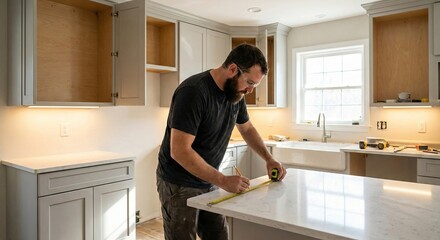
The decision to remodel your home represents a significant investment of time, money, and energy. Whether you are updating a single room or undertaking a whole-house renovation, the disruption to your daily life and the financial commitment involved demand that you make choices that will serve you well for years to come. One of the most important considerations that homeowners often overlook until construction has already begun is the integration of smart home technology into their remodeling plans.
The timing of a remodel presents a unique opportunity to incorporate smart home features in ways that would be difficult, expensive, or impossible to achieve later. When walls are open, wiring is exposed, and contractors are already on site making structural changes, adding the infrastructure for intelligent home systems becomes dramatically more cost-effective and aesthetically pleasing. Understanding how to plan for and integrate these technologies during your remodel can transform your home into a more comfortable, efficient, and valuable property. Contact J&R Construction for more details.
Planning Your Smart Home Infrastructure Before Construction Begins
The single most critical mistake homeowners make with smart home integration is treating it as an afterthought rather than a foundational element of their remodel. Once drywall goes up and paint goes on, your opportunities to add wiring, install in-wall devices, or create centralized control systems become exponentially more complicated and expensive.
Begin by identifying which smart home features matter most to your lifestyle. Some homeowners prioritize security and surveillance, while others focus on energy efficiency, entertainment systems, or convenience features like automated lighting and climate control. Your priorities will determine which infrastructure requirements you need to address during the construction phase.
Work with both your general contractor and a smart home specialist early in the planning process. These professionals can help you understand where additional electrical circuits, network cabling, or specialized wiring should be installed while walls are open. Even if you are not ready to purchase every smart device immediately, installing the infrastructure now means you can add devices later without tearing into finished walls. Conduit runs can be installed inexpensively during construction, providing pathways for future technology upgrades without requiring demolition.
Consider creating a centralized wiring closet or equipment rack where network equipment, smart home hubs, and control systems can be housed. This centralized approach makes troubleshooting easier, keeps equipment organized, and provides better system reliability than scattering components throughout your home. Adequate ventilation, backup power options, and accessibility for maintenance should all be incorporated into this space during the planning phase.
Network Infrastructure as the Foundation
Every smart home device relies on robust network connectivity to function properly. During a remodel, installing comprehensive network infrastructure should be treated with the same importance as electrical and plumbing systems. Wireless connectivity alone, while convenient, cannot provide the reliability and performance needed for a fully integrated smart home.
Hardwired ethernet connections offer superior speed, reliability, and security compared to wireless alternatives. During your remodel, run ethernet cables to locations where you will want stationary devices like smart televisions, gaming systems, security cameras, wireless access points, and smart home hubs. Even in rooms where you primarily plan to use wireless devices, installing ethernet jacks provides options for future needs and supports wireless access points that can be strategically placed for optimal coverage.
The quality of your wireless network determines how well your smart home functions. Rather than relying on a single router, plan for a mesh network system or multiple hardwired access points distributed throughout your home. This approach eliminates dead zones and ensures that smart devices maintain strong, consistent connections regardless of where they are located. Your remodel provides the perfect opportunity to mount access points in optimal locations, run power and data cabling to these positions, and create a wireless infrastructure that will support current and future devices.
Do not underestimate bandwidth requirements either. As you add security cameras, streaming devices, smart appliances, and other connected equipment, network traffic increases substantially. Ensure that your internet service plan can support your anticipated usage, and work with your networking professional to configure quality of service settings that prioritize critical functions like security systems over less essential traffic.
Intelligent Lighting and Electrical Systems
Lighting represents one of the most impactful smart home integrations you can achieve during a remodel. The ability to control lighting scenes, adjust brightness and color temperature, and automate lighting based on time of day or occupancy transforms how you experience your home. However, implementing smart lighting correctly requires planning during the electrical installation phase.
Traditional smart bulbs work in existing fixtures but have limitations. They require constant power to maintain their wireless connectivity, meaning wall switches must remain in the on position. This arrangement confuses guests and family members who instinctively flip switches, cutting power to the bulbs and disabling their smart features. A better approach involves installing smart switches and dimmers that control standard bulbs, or integrating smart fixtures directly into your electrical system.
Smart switches and dimmers can be installed during your remodel in place of standard switches, often using existing electrical boxes. However, many smart switches require neutral wires, which older homes may lack at switch locations. With walls open during your remodel, electricians can easily run neutral wires to switch boxes, ensuring compatibility with current and future smart switch technology. This simple step eliminates frustrating compatibility issues that would be expensive to resolve later.
Consider where you want automated lighting control and plan accordingly. Outdoor lighting, closet lighting, stairway illumination, and landscape lights all benefit from automation and scheduling. Installing the appropriate switches, sensors, and wiring during construction costs a fraction of what retrofitting would require. Motion sensors can be integrated into lighting circuits, and daylight sensors can adjust interior lighting based on available natural light, reducing energy consumption while maintaining optimal illumination.
Climate Control and Energy Management
Heating and cooling typically represent the largest energy expenses in a home. Smart thermostats and zoned climate control systems can dramatically reduce these costs while improving comfort, but they require proper infrastructure that is best installed during remodeling work.
Smart thermostats offer features like learning your schedule, adjusting temperatures based on occupancy, and providing detailed energy usage data. However, they work even better when integrated into a properly zoned HVAC system. If your remodel involves significant changes to room layouts or additions, consider designing a zoned system that allows independent temperature control for different areas of your home. This requires additional dampers, sensors, and control wiring that should be installed during the construction phase.
Beyond thermostats, consider integrating other energy management technologies. Smart plugs and outlets can monitor and control power consumption for individual devices. Whole-house energy monitors provide real-time data about electricity usage, helping you identify wasteful appliances and adjust consumption patterns. Installing dedicated circuits for major appliances during your remodel allows for easier monitoring and control of these significant energy consumers.
Window treatments also impact energy efficiency and comfort. Motorized blinds and shades can be programmed to adjust based on sun position, reducing heat gain in summer and heat loss in winter. The motors and controls for these systems are most easily installed during remodeling when access to window frames and electrical systems is readily available. Coordinating with your contractor ensures that appropriate power sources and mounting provisions are included in the work.
Security and Monitoring Systems
A remodel provides the ideal opportunity to create a comprehensive, integrated security system that would be difficult to install later. Hardwired security cameras, doorbell cameras, motion sensors, and alarm system components offer superior reliability compared to battery-powered alternatives, but they require power and data connections best installed during construction.
Plan camera locations carefully, considering both security needs and privacy concerns. Exterior cameras should cover entry points, driveways, and vulnerable areas, while interior cameras might focus on main living areas or specific valuables. Running power and ethernet cables to these locations during your remodel eliminates the need for visible wiring or reliance on wireless connections that can be disrupted.
Smart locks and access control systems benefit from being integrated into your remodel plans as well. If you are replacing doors or modifying entryways, ensure that new doors are compatible with smart lock systems and that appropriate power sources are available. Some smart locks require electrical connections rather than batteries, and planning for this during construction prevents complications later.
Consider integrating your security system with other smart home functions. Lights can activate when motion is detected, door locks can trigger specific lighting scenes, and your thermostat can adjust when the security system is armed in away mode. These integrations require planning and coordination between different systems, something best addressed during the design and construction phases of your remodel.
Final Thoughts
Integrating smart home technology during your remodeling project transforms a simple update into a forward-thinking investment that enhances comfort, security, and efficiency while increasing your home’s value. The key to success lies in planning these integrations from the very beginning rather than treating them as additions after construction has begun.
Work with qualified professionals who understand both construction and technology, communicate your priorities and budget clearly, and resist the temptation to skip infrastructure improvements that will be expensive or impossible to add later. The relatively modest additional cost of installing proper wiring, network infrastructure, and smart home components during your remodel pays dividends immediately and for years to come. Your home will not only function better and cost less to operate, but it will also be positioned to adapt as technology continues to evolve, protecting your investment well into the future.